Top Quality Bathtub Mats for Global Buyers Exploring Options?
In the evolving market of bathroom accessories, the Bathtub Mat stands out as an essential item for safety and comfort. Experts in the field, like Dr. Sarah Lang, a noted hygienist, emphasize its importance: "A quality Bathtub Mat not only prevents slips but also adds a touch of style." Her insights showcase a blend of functionality and aesthetics in choosing the right mat.
Bathtub Mats come in various materials, patterns, and sizes, catering to diverse tastes. They are vital in homes, hotels, and spas across the globe. While many buyers focus on design, it's crucial to consider durability and slip resistance. Many mats look appealing but can lack the necessary grip.
Yet, some options on the market fall short. Customers sometimes find their chosen mats wear out quickly or fail to provide adequate safety. It's essential to research and choose wisely. The right Bathtub Mat should enhance the bathing experience while ensuring safety. Reflecting on these features can lead to better choices for buyers seeking quality and reliability.
Understanding the Importance of High-Quality Bathtub Mats
Bathtub mats play a crucial role in bathroom safety and comfort. According to a report by the National Safety Council, nearly 240,000 injuries related to bathroom falls occur each year in the United States. These statistics emphasize the necessity for high-quality mats that provide stability. A good bathtub mat can significantly reduce the risk of slips and falls, especially for children and the elderly.
Material quality is another vital aspect. A well-made mat should be water-resistant and feature a non-slip backing to ensure it stays in place. A survey conducted by the American Cleaning Institute found that 70% of consumers prioritize durability and ease of cleaning when selecting bathroom mats. High-quality mats, made from materials like rubber or microfiber, offer excellent grip and longevity. However, many shoppers often overlook the importance of maintaining these mats to prevent mold and buildup.
It's essential for buyers to consider these factors and reflect on their choices. Many high-quality mats are available, yet they often come with a higher price tag. Reflecting on your budget and safety needs can help guide your decision. Investing in a quality mat is not merely a purchase; it’s about ensuring safety and comfort in your bathroom space.
Top Quality Bathtub Mats for Global Buyers Exploring Options? - Understanding the Importance of High-Quality Bathtub Mats
| Material |
Size (inches) |
Color Options |
Non-Slip Features |
Machine Washable |
Price Range (USD) |
| Rubber |
20 x 32 |
Blue, Grey, White |
Yes |
Yes |
15 - 25 |
| Microfiber |
24 x 36 |
Pink, Green, Neutral |
Yes |
Yes |
10 - 20 |
| PVC |
30 x 40 |
Transparent, Black |
Yes |
No |
20 - 30 |
| Cotton |
22 x 34 |
Beige, Navy, Aqua |
No |
Yes |
12 - 22 |
| TPE |
26 x 38 |
Red, Yellow, Grey |
Yes |
Yes |
18 - 28 |
Types of Bathtub Mats Available for Global Consumers
Bathtub mats serve as an essential accessory, enhancing safety and comfort during baths. Different types of mats are available for global consumers, each designed for specific needs and preferences. For instance, rubber mats provide excellent grip and are highly durable. They are ideal for families with children or elderly individuals.
Foam mats, on the other hand, offer a soft surface that feels gentle on the skin. These mats are lightweight and can be easy to clean. They often come in various colors, allowing customization in bathroom decor. However, foam mats may not provide the same level of traction as rubber options.
When choosing a bathtub mat, consider the material. Mats made from natural fibers can be more absorbent but might require more maintenance. Also, some mats may fade due to exposure to water. It’s essential to research and read user reviews to ensure you’re making a reliable purchase.
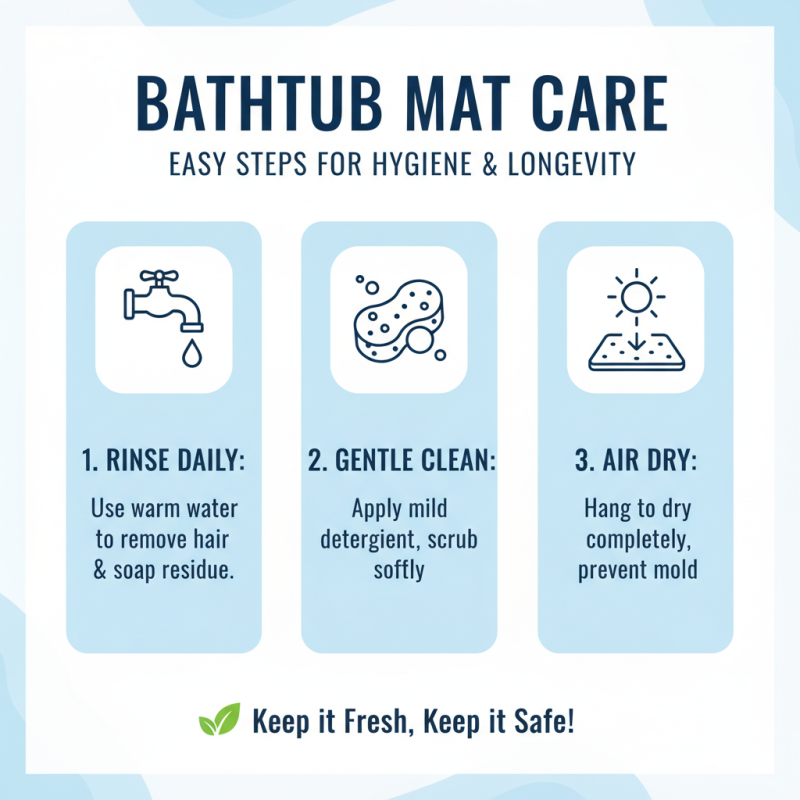
Tips: Always check the size of your bathtub before buying a mat. A mat that is too large can fold or slip, while a small mat may not cover sufficient space. Regular cleaning helps maintain hygiene and prevents mold growth.
Top Quality Bathtub Mats for Global Buyers Exploring Options
Key Features to Consider When Choosing Bathtub Mats
Choosing the right bathtub mat can significantly enhance safety and comfort in your bathroom. One critical feature to consider is the material. Mats made from natural rubber or PVC often offer excellent slip resistance. According to recent industry reports, nearly 30% of bathroom accidents are due to slips. A high-quality mat can help mitigate these risks.
Another essential aspect is the size and coverage area. A mat that fits snugly around the tub can effectively catch water spills. Research indicates that mats covering at least 30x60 centimeters are most effective in preventing slips. Texture also matters. Some mats include suction cups on the underside for added grip. However, not all textured surfaces provide the same level of traction, leading to potential oversights in safety.
Cleaning ease is equally important when selecting a bathtub mat. Mats that are machine washable maintain hygiene, as bacteria thrive in wet environments. A study showed that 45% of bathroom mats tested contained mold or mildew. This statistic highlights the necessity of selecting a mat that is easy to dry and maintain. A well-chosen mat not only enhances safety but also complements bathroom aesthetics, making it a crucial choice for homeowners.
Top Brands and Manufacturers for Bathtub Mats Worldwide
When selecting bathtub mats, buyers should consider various brands and manufacturers. High-quality mats enhance safety and comfort in bathrooms. A wide range of materials is available, each with distinct benefits. For instance, rubber mats provide excellent grip and durability, while fabric options offer softness and aesthetic appeal.
Some brands stand out for their commitment to quality. They prioritize slip-resistant features and easy maintenance. While many mats are machine washable, others require hand washing. Knowing how to care for a mat is essential for optimal longevity.
Many buyers reflect on their choices. It is crucial not to overlook the importance of mold-resistant materials. Investing in the right mat leads to a safer bathroom environment. The ideal choice promotes hygiene and comfort, making the bathing experience more enjoyable for everyone.